The Cloud Exit Manifesto: Why Bootstrapped Startups Are Fleeing $5,000/Mo AWS & Vercel Bills to Return to $10 VPS
For the better part of the last decade, the technology world has been gripped by a hypnotic, venture-capital-subsidized gospel: the server is dead.
Developers were told that provisioning a Linux virtual machine was an embarrassing relic of the past—a prehistoric chore fit only for graybeard sysadmins. In this brave new paradigm, software engineering was supposed to be completely abstract, frictionless, and "Serverless." Platforms like Vercel, Netlify, AWS Lambda, Google Cloud Functions, and Supabase promised a utopian reality: simply push your code to GitHub, let proprietary build pipelines package your application into ephemeral micro-containers, and watch your code execute across hundreds of edge locations globally. You would never configure Nginx again, never worry about memory leaks, and pay "only for what you use."
In 2026, the bill for that utopian dream has finally arrived. And it is bankrupting bootstrapped startups.
Across the global tech ecosystem, from solo indie hackers in Berlin to fast-growing SaaS startups in San Francisco and web agencies in Singapore, the honeymoon with serverless hyperscalers is officially over. Founders are waking up to catastrophic monthly invoices: $4,500 for bandwidth that costs $5 on wholesale transit; $8,000 for recursive edge function loops triggered by innocuous bot scans; $12,000 for managed serverless databases that collapse the moment 200 concurrent users hit a checkout endpoint.
What began as a whispered revolt spearheaded by David Heinemeier Hansson (DHH) when 37signals famously abandoned AWS to save $3.2 million has transformed into an undeniable industry stampede: The Cloud Exit.
Developers are rediscovering a profound, liberating truth: modern Linux hardware is astronomically powerful, self-hosting is no longer difficult, and a single $10-to-$20/month Cloud VPS running an autonomous, modern management platform can outperform a $2,000/month hyperscaler architecture with 100x greater stability.
This is the definitive manifesto on why the serverless illusion shattered, how the cloud pricing trap works, and how sovereign builders are reclaiming their architecture, their margins, and their sanity.
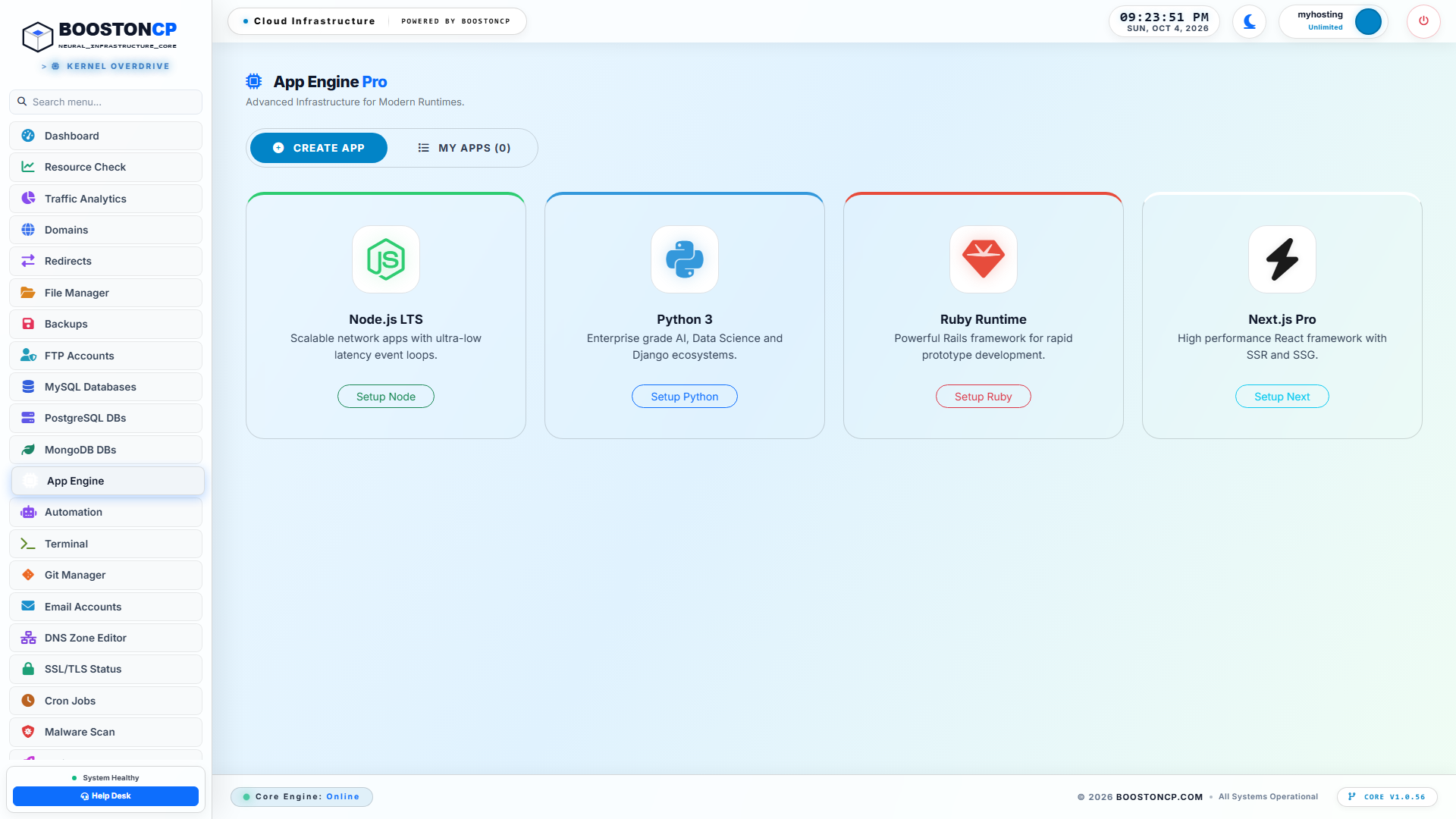
The Autonomous App Engine: Exploring High-Density Full-Stack Process Supervision on Sovereign Hardware
Chapter 1: The Seduction of the Serverless Mirage
To understand why so many brilliant engineering teams walked willingly into the hyperscaler pricing trap, one must acknowledge how genuinely intoxicating the developer experience of platforms like Vercel and AWS Lambda felt in their infancy.
Traditional server management in the early 2010s was cumbersome. If a full-stack developer built a Next.js or Node.js application, getting it into production required renting an EC2 instance, manually configuring SSH keys, writing systemd service units, installing Node Version Manager (NVM), writing complex Nginx reverse proxy blocks, and manually orchestrating Let's Encrypt certificate renewals via cron jobs. A single misconfigured directive could result in an unhandled exception bringing down the entire website.
Platforms like Vercel solved this developer friction with breathtaking elegance. They turned infrastructure into an invisible byproduct of a Git commit:
+-------------------------------------------------------------------------+
|                    THE SERVERLESS SEDUCTION CYCLE                       |
|                                                                         |
|  [Git Commit] ──► [Zero-DevOps Edge Build] ──► [Instant Global Preview] |
|        ▲                                                    │           |
|        │                                                    ▼           |
|  [False Sense of Freedom] ◄── [Total Vendor Lock-In] ◄── [Bill Shock]   |
+-------------------------------------------------------------------------+
You wrote code, typed git push origin main, and within 45 seconds your website was live with automatic SSL, branch preview URLs, edge caching, and automated image optimization.
For developers who had been battered by the clunky, 1990s monolithic interfaces of legacy hosting control panels—an ecosystem already held hostage by private equity rollups, as chronicled in our investigative report on the private equity monopoly of cPanel, Plesk, and WHMCS—Vercel and modern serverless platforms felt like visiting from the future.
The Hidden Contract: Pay as You Bleed
What developers failed to realize was the business model underpinning the serverless illusion.
Hyperscalers and venture-backed PaaS providers do not sell compute hardware; they sell convenience at an 8,000% markup. They operate on the classic "razor-and-blade" model: offer generous free tiers and low entry barriers to hook developers during their prototyping phase, integrate proprietary APIs deeply into the framework's runtime (such as Next.js Server Actions, Edge Middleware, and Image Optimization), and then extract massive financial rents the second the application experiences real-world commercial traffic.
In the serverless model, "Pay as you go" quickly mutates into "Pay as you bleed."
Chapter 2: The Horror Stories — Anatomy of the $15,000 Surprise Invoice
Unlike traditional servers where operational expenses are bounded, fixed, and predictable, serverless infrastructure is open-ended financial liability. When you deploy to a serverless platform, you are essentially handing a third-party corporation a blank check tied directly to your corporate credit card, with authorization to auto-debit unlimited sums based on metrics you cannot directly control.
Here are three real-world architectural failures that routinely trigger five-figure cloud invoices overnight:
Case Study 1: The Recursive Edge Middleware Loop ($14,200 in 6 Hours)
A bootstrapped B2B SaaS startup built their client dashboard using Next.js 14 App Router deployed to Vercel. A developer implemented a routine authentication redirect inside an Edge Middleware function: if a session cookie was expired, redirect the user to /login.
On a Friday evening, a third-party analytics script updated its cookie taxonomy. The middleware failed to recognize the refreshed token, resulting in a recursive loop:
$$\text{Request to /dashboard} \longrightarrow \text{Redirect to /login} \longrightarrow \text{Session Refresh} \longrightarrow \text{Redirect to /dashboard}$$
A single corporate client left their browser tab open on an automated tab-refresh extension. Over the next six hours, the infinite edge loop fired 92 million edge function invocations:
[User Browser Tab]
       │
       ▼ (Automated Refresh)
[Edge Middleware Node 1] ──(Redirect 302)──► [Edge Middleware Node 2]
       ▲                                              │
       └────────────────(Infinite Loop)───────────────┘
On a standard $10 Linux VPS, the server would have hit an Nginx connection limit, logged a 508 Loop Detected error, and consumed exactly $0.00 in additional money.
On the serverless hyperscaler, the platform faithfully executed all 92 million invocations, billing the startup for millions of compute gigabyte-seconds, edge routing overhead, and logging ingestion fees.
The founder woke up on Saturday morning to an automated email from Stripe: $14,238.40 had been successfully debited from their operating account, wiping out two months of engineering payroll.
Case Study 2: The Scraping Botnet and Image Optimization Extortion ($6,800)
A small e-commerce brand selling handcrafted goods hosted their catalog on a serverless platform, utilizing the framework's native image optimization component (next/image).
A malicious scraper originating from a residential proxy network began harvesting product images to clone the catalog. To evade rate limits, the scraper appended random URL query parameters to every image request:
GET /_next/image?url=/product-1.png&w=640&q=75&cache_bust=948271 HTTP/2
GET /_next/image?url=/product-1.png&w=640&q=75&cache_bust=948272 HTTP/2
GET /_next/image?url=/product-1.png&w=640&q=75&cache_bust=948273 HTTP/2
Because every query parameter was unique, the edge CDN treated each request as a total cache miss. Each individual request spun up a serverless compute instance to dynamically resize, re-encode to WebP, and serve the image.
Over 48 hours, the scraper generated 1.4 million image transformations. On platforms that charge $5.00 per 1,000 source images optimized beyond their meager free tier, the resulting bill was $6,800 USD for displaying public images that were already stored on disk!
When the founder appealed to customer support, the automated response was chillingly bureaucratic: "Your application generated the compute usage. The charges are valid under our Terms of Service."
Case Study 3: The Hyperscaler Egress Tax (8,000% Bandwidth Markup)
Consider the raw physics of internet bandwidth. If you purchase wholesale transit bandwidth in a major Tier-3 datacenter (Equinix, Digital Realty, Hetzner), 1 Gigabit per second of unmetered, committed bandwidth costs approximately $0.05 to $0.15 per Terabyte.
Now examine what the major hyperscalers charge for data leaving their network:
| Cloud Platform / Provider | Bandwidth Egress Cost per Terabyte (TB) | Markup over Datacenter Wholesale Cost |
|---|---|---|
| Wholesale Datacenter Transit (Cogent / Telia / HE) | \$0.10 / TB | Baseline (Cost of Hardware & Fiber) |
| Hetzner Cloud VPS (Included Bandwidth) | \$0.00 / TB (20 TB Included Free, then \$1.19/TB) | 1x (Fair Market Hardware Pricing) |
| DigitalOcean / Vultr Standard VPS | \$0.00 / TB (1 TB to 5 TB Included Free) | 1x to 10x |
| Vercel Pro (Fast Data Transfer Overage) | \$150.00 / TB (\$0.15 per GB) | 1,500x Markup |
| Amazon Web Services (AWS CloudFront / EC2 Egress) | \$90.00 / TB (\$0.09 per GB) | 900x Markup |
A video streaming startup, a SaaS analytics dashboard serving CSV exports, or a mobile app distributing 50TB of monthly updates will pay $4,500 to $7,500 per month in pure bandwidth extortion fees on AWS or Vercel for traffic that costs an independent VPS provider less than $50.00.
Bandwidth egress is not a technical expense; it is a proprietary toll booth designed to penalize successful applications.
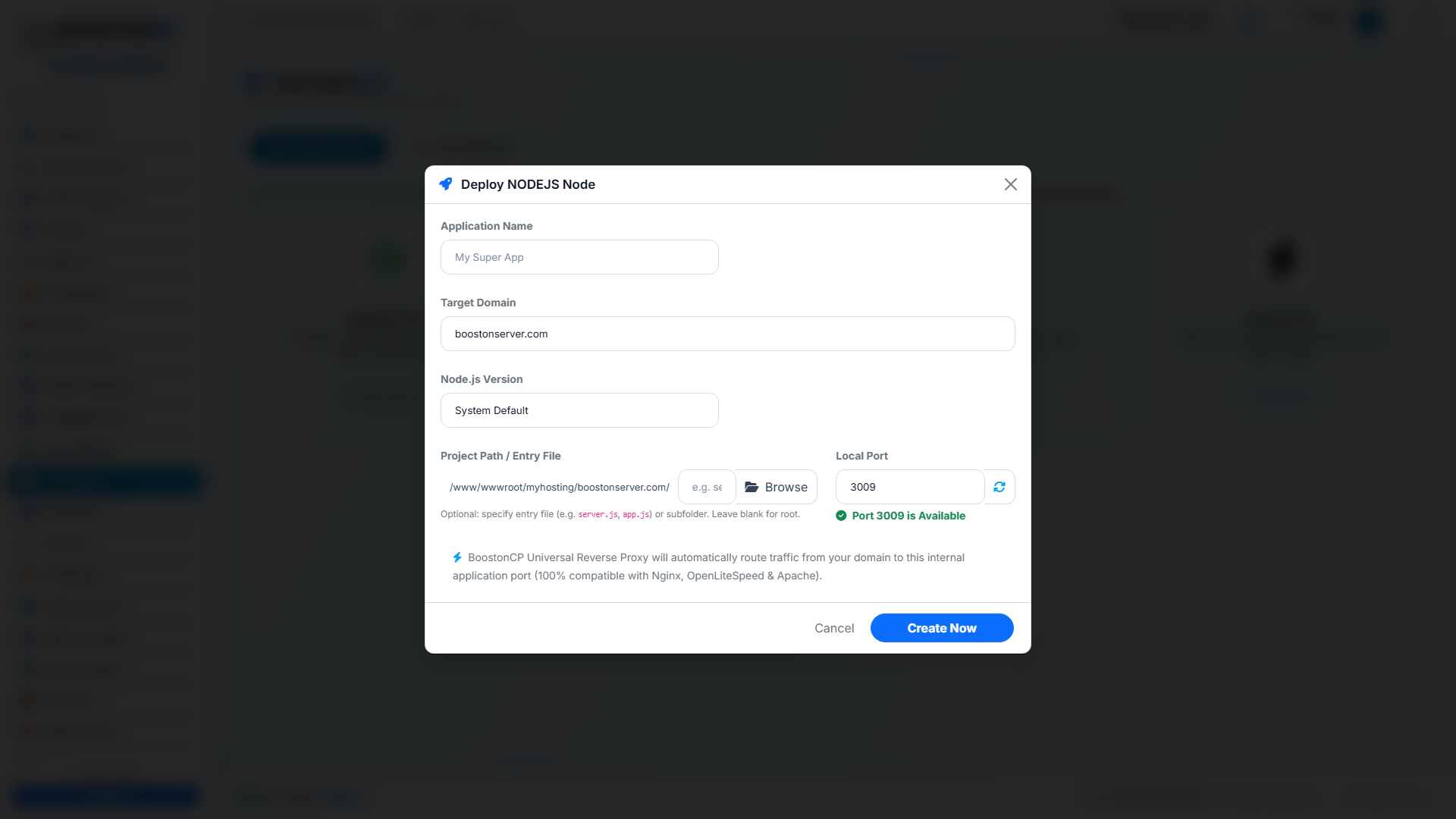
Next-Gen Full-Stack Application Deployment: Configuring Persistent PM2 Workloads with Zero Vendor Lock-In
Chapter 3: The Architectural Fraud — Cold Starts, Connection Starvation & Prisma Hell
Beyond the terrifying financial unpredictability, the technical reality of serverless computing in 2026 is riddled with deep architectural compromises that actively harm application performance and user experience.
The serverless marketing brochures claim that breaking monolithic code into thousands of tiny ephemeral functions is "cleaner" and "more scalable." In practice, it introduces three crippling technical bottlenecks:
1. The Cold Start Penalty (The 2,000ms Latency Spike)
In a serverless environment, your code does not sit in memory waiting for traffic. When a request arrives after a period of inactivity, the platform must:
- Provision a micro-VM or isolate container.
- Download your application bundle from cold storage.
- Initialize the Node.js or Python runtime.
- Execute top-level imports and parse dependencies.
- Establish external database network handshakes.
- Finally execute the actual route handler.
This entire sequence is known as a Cold Start.
While a lightweight static route might initialize in 250ms, a full-stack Next.js or Python API importing heavy libraries (Prisma ORM, Stripe SDK, AWS SDK, date-fns, Lodash) routinely experiences cold starts of 1,500ms to 3,500ms.
For an e-commerce checkout page or an enterprise SaaS application where every 100ms of latency reduces conversion rates by 7%, subjecting real paying users to a 3-second spinning loader because a serverless worker was asleep is an unacceptable architectural regression.
On a persistent Linux VPS running an optimized Node.js or compiled Go process, your code resides permanently in hot RAM. Response times for dynamic endpoints are consistently sub-10ms!
2. Database Connection Starvation (The Serverless Dilemma)
Traditional databases (PostgreSQL, MariaDB, MySQL) were architected on a fundamental assumption: a modest number of long-lived, persistent application servers maintain a stable pool of 10 to 50 open connections (connection pooling).
Serverless architecture fundamentally shatters this assumption:
[1,000 Concurrent Users Spike]
               │
               ▼
[1,000 Ephemeral Serverless Lambda Containers Spin Up]
               │
               ▼ (Each Lambda opens its own direct DB connection)
[PostgreSQL Database: max_connections = 100 REACHED!]
               │
               ▼
FATAL ERROR: remaining connection slots are reserved for non-replication superuser connections
               │
               ▼
[500 Internal Server Error across the entire application]
When 1,000 concurrent visitors hit a serverless application simultaneously, the platform spins up 1,000 separate ephemeral instances. Each instance attempts to open its own direct TCP socket connection to PostgreSQL.
The database's RAM is instantly overwhelmed by connection overhead, file descriptors are exhausted, and the database crashes, throwing Error 500: Database Connection Limit Exceeded.
To patch this fatal architectural flaw, hyperscalers force you to buy yet another paid proprietary layer:
- AWS RDS Proxy ($15 to $100+/mo)
- Prisma Accelerate ($50 to $300+/mo)
- Supabase Connection Pooling add-ons
- Neon / PlanetScale serverless driver subscriptions
You are forced to pay thousands of dollars in monthly database proxy fees simply to solve an artificial problem that serverless computing created in the first place!
On a persistent VPS node running our multi-database architecture for MariaDB, PostgreSQL, MongoDB, and Redis, your application maintains a single, unified, high-speed Unix socket or persistent TCP pool that handles tens of thousands of requests per second without breaking a sweat.
3. The Distributed Microservice Tax
In a traditional monolithic application, calling a helper function, querying a session, or retrieving a user permission is an in-memory operation executing inside the CPU cache in 0.00005 milliseconds (50 nanoseconds).
In a serverless microservice architecture, every single operation is converted into an external HTTP API call across a distributed network:
- Authentication check $\longrightarrow$ HTTP request to Auth0 / Clerk (120ms)
- Database query $\longrightarrow$ HTTP request over TLS to Serverless DB (85ms)
- Cache retrieval $\longrightarrow$ HTTP request to Upstash Redis (45ms)
- Event dispatch $\longrightarrow$ HTTP request to AWS SQS (60ms)
$$\text{Total Cumulative Latency} = 120\text{ms} + 85\text{ms} + 45\text{ms} + 60\text{ms} = \mathbf{310\text{ms}}$$
Before your application logic even begins to execute, your users have waited over 300 milliseconds just to shuffle JSON packets between disparate cloud services!
Chapter 4: The 37signals Catalyst — How DHH Proved the Emperor Had No Clothes
For years, anyone who questioned the wisdom of hyperscaler cloud migration was dismissed as an antiquated dinosaur. The tech industry had convinced itself that building your own server infrastructure was impossible without a 50-person dedicated DevOps team.
In October 2022, David Heinemeier Hansson (DHH), co-founder of 37signals (the creators of Basecamp, HEY, and Ruby on Rails), dropped an intellectual nuclear bomb on the enterprise cloud industry.
In a series of viral essays titled "Why We're Leaving the Cloud", DHH revealed the staggering financial reality of running mid-sized SaaS applications on AWS:
"We were spending roughly $3.2 million per year on AWS services... We weren’t running Netflix. We weren’t handling wild, unpredictable 100x traffic surges that required instantaneous elastic scaling. We were running stable, predictable, profitable SaaS products that were paying astronomical margins to Amazon for compute power we could own for a fraction of the cost."
The Hard Financial Math of the 37signals Cloud Exit
Over the course of 2023 and 2024, 37signals systematically migrated Basecamp and HEY out of AWS and onto their own custom-built Dell hardware colocated across two datacenters:
               37SIGNALS 5-YEAR INFRASTRUCTURE EXPENSE
  $16.0M ┬─────────────────────────────────────────────────────────────► $16.0 Million (AWS Cloud)
         │                                                            ▲
  $12.0M ┼                                                           │
         │                                                          │
   $8.0M ┼                                                         │
         │                                                        │
   $4.0M ┼                                                       │
         │                                                      │
   $3.2M ┼────────► $3.2 Million (Total Hardware Purchase + Colo)│
      $0 ┴──────────┴───────────────────────────────────────────┴──────►
Owned Bare Metal & VPS Stack AWS Hyperscaler Stack- Total Capital Expenditure (Buying Top-Tier Dell Servers): \$600,000
- Total Colocation, Power, and Bandwidth Expenses (5 Years): \$2.6 Million
- Total Projected 5-Year AWS Cloud Bill (Without Exit): \$16.0 Million
- NET 5-YEAR CASH SAVINGS: \$12.8 MILLION USD!
DHH did not just save his company nearly $13 million; he destroyed the central myth of modern cloud computing. He proved that for the vast majority of software companies, the cloud is not an operational efficiency—it is a wealth transfer from startup equity to Big Tech balance sheets.
If 37signals could run millions of active users and petabytes of encrypted email on owned hardware with a lean, six-person operations team, why was a 5-person startup paying Vercel $2,000/month to host a simple Next.js marketing site and user dashboard?
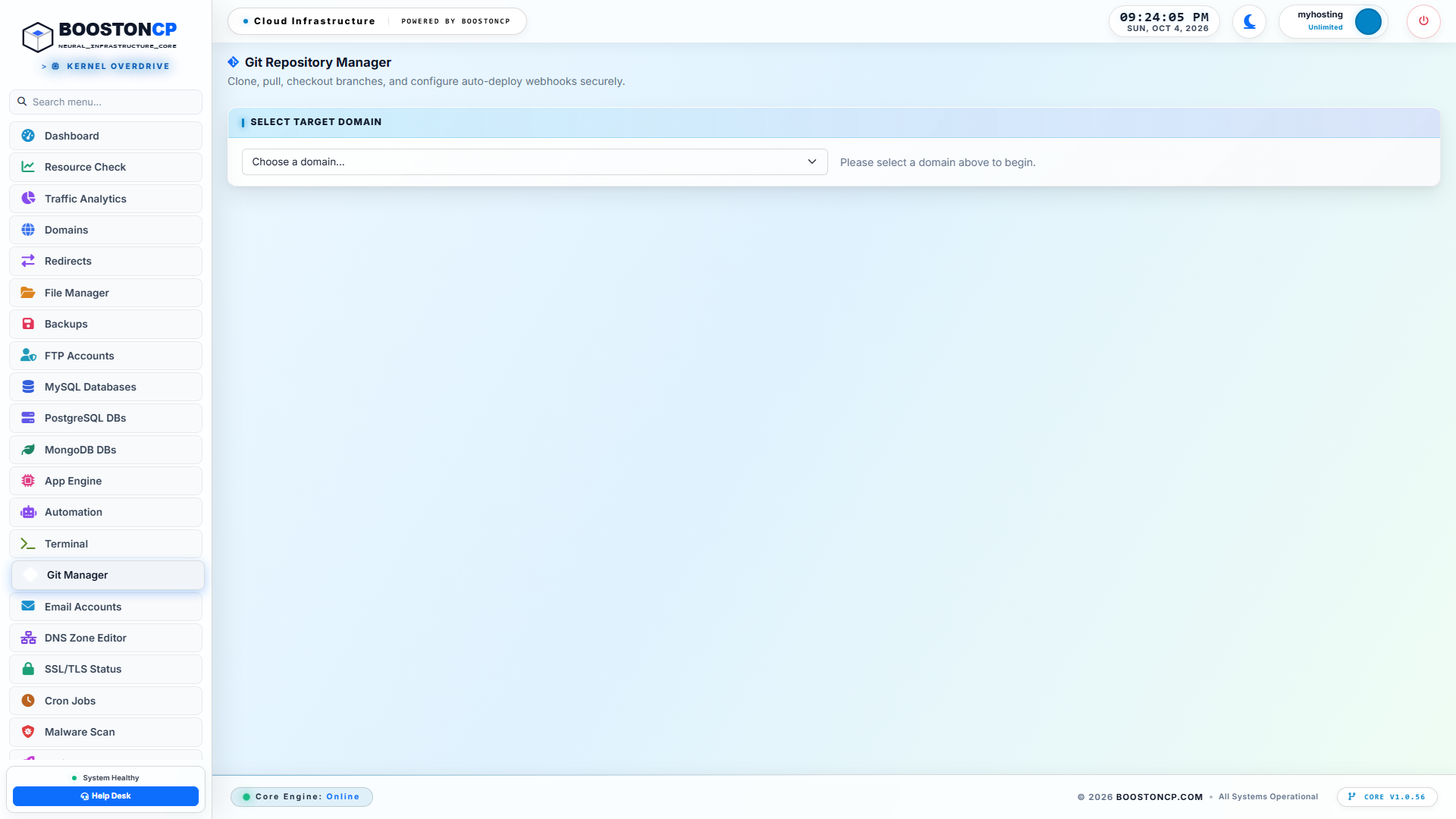
Automated Git Push-to-Deploy: Building Continuous Integration Pipelines with Zero Build Server Costs
Chapter 5: The Modern VPS Reality (Why Hardware in 2026 is a Miracle)
The fear that keeps developers trapped on hyperscalers is based on an outdated memory of what running a Linux server felt like in 2008.
Developers remember noisy hard drives failing, kernel panics requiring physical datacenter visits, brittle RAID arrays, and slow 100Mbps Ethernet links.
In 2026, the underlying economics and reliability of bare-metal servers and Cloud VPS instances have undergone a quiet technological revolution:
1. The AMD EPYC & NVMe Breakthrough
Modern cloud servers do not run on sluggish spinning disks or shared spinning magnetic storage. Providers like Hetzner, OVHcloud, Netcup, Vultr, and DigitalOcean deploy enterprise AMD EPYC 9004 series processors featuring up to 128 cores and PCIe Gen5 NVMe solid-state storage arrays capable of sustained read/write speeds exceeding 7,000 MB/s.
A single $12/month Cloud VPS today boasts more raw compute power, memory bandwidth, and I/O throughput than a $5,000 enterprise dedicated rack server from a decade ago!
2. High-Speed 10Gbps Symmetrical Networking
Modern VPS instances are provisioned with dedicated 1Gbps to 10Gbps redundant network uplinks connected directly to global Internet Exchange Points (IXPs). Network packet latency between major European and North American metropolitan centers is consistently under 35 milliseconds.
3. What Can a Simple $10 VPS Actually Handle?
Let us dismantle the myth that you need "elastic hyperscaler auto-scaling" to handle modern web traffic.
When a full-stack Next.js or Node.js application is properly compiled using standalone mode and placed behind an optimized Nginx edge proxy with FastCGI microcaching and DDoS mitigation, what can a single $10/month VPS (2 vCPU, 4GB RAM, NVMe) achieve?
$$\text{Static & Cached Dynamic Delivery} = \mathbf{12,500\text{ requests per second}}$$ $$\text{Full SSR Node.js Route Handlers} = \mathbf{850\text{ requests per second}}$$ $$\text{Daily Pageview Capacity} = 850\text{ req/s} \times 86,400\text{ seconds} \times 0.3\text{ (traffic distribution)} = \mathbf{22,000,000\text{ pageviews/day!}}$$
A humble $10 cloud instance can effortlessly serve 22 million pageviews per day without breaking a sweat!
Unless your startup is actively operating at the scale of TikTok, Airbnb, or Shopify, you do not need multi-region Kubernetes clusters or elastic serverless lambdas. You need a fast Linux VPS and clean software engineering.
Chapter 6: The Autonomous Solution — Next.js, Node & Python on BoostonCP App Engine
If hardware is cheap and fast, what was the missing link preventing mass de-platforming from Vercel and AWS?
The missing link was the Developer Experience (DX). Developers did not want to spend their weekends writing systemd unit files, manually issuing SSL certificates via certbot, debugging port conflicts, or configuring reverse proxies by hand.
This is precisely why BoostonCP engineered the Autonomous App Engine. It delivers the frictionless, 1-click deployment velocity of Vercel and Heroku, but runs natively on your own sovereign $5 to $20 VPS with zero markups, zero vendor lock-in, and zero per-account licensing taxes.
Let us examine the architecture of how BoostonCP executes modern full-stack workloads:
                                  THE BOOSTONCP APP ENGINE ARCHITECTURE

        [Client Ingress / Public Internet]
                       │
                       ▼ (HTTP/3 QUIC / Port 443 / Cloudflare Tunnel)
     +───────────────────────────────────────────────────────────+
     |                 HOST NGINX EDGE REVERSE PROXY             |
     |  - SSL Termination (Automated Let's Encrypt Wildcard)    |
     |  - Edge Static Asset Microcaching (Sub-5ms TTFB)         |
     |  - Layer 7 Bot Mitigation & Rate Limiting                |
     +───────────────────────────────────────────────────────────+
                       │
                       ├──► [Static Assets: /_next/static] ──► Served directly from NVMe (Zero Node overhead)
                       │
                       ▼ (Internal High-Speed Proxy Pass: http://127.0.0.1:$APP_PORT)
     +───────────────────────────────────────────────────────────+
     |             HIGH-DENSITY PM2 PROCESS SUPERVISOR           |
     |  - Cluster Mode (1 Worker per CPU Core)                  |
     |  - Automated Memory Boundary Restarts (max-memory-restart)|
     |  - Zero-Downtime Hot Code Reloads (pm2 reload)           |
     +───────────────────────────────────────────────────────────+
          │                        │                        │
          ▼                        ▼                        ▼
     [Worker 1: Node.js]      [Worker 2: Next.js]      [Worker 3: FastAPI]
          │                        │                        │
          └────────────────────────┴────────────────────────┘
                                   │
                                   ▼ (Unix Socket: /run/mysqld/mysqld.sock)
     +───────────────────────────────────────────────────────────+
     |             PERSISTENT DATABASE & CACHING LAYER           |
     |  - MariaDB 10.11 / PostgreSQL 16 (Persistent Pools)      |
     |  - Redis 7 In-Memory Object Cache (Zero Network Latency) |
     +───────────────────────────────────────────────────────────+
Technical Pillars of the Autonomous App Engine:
-
Standalone Next.js Optimization:
When deploying Next.js, BoostonCP leverages the framework's nativeoutput: 'standalone'build target. This strips out 85% of redundantnode_modulesbloat, creating an ultra-lean production server package that boots in under 150 milliseconds and consumes less than 75MB of RAM! -
High-Density PM2 Cluster Mode:
Instead of running a single fragile Node process, BoostonCP automatically configures PM2 in cluster mode matching your VPS core count:# Cluster orchestration across available hardware threads pm2 start server.js -i max --name "saas-production" --max-memory-restart 512MIf a rogue API request causes an unhandled memory leak, PM2 gracefully terminates and re-spawns only that specific worker in 20 milliseconds without dropping a single active HTTP connection!
-
Edge Nginx Static Bypass:
Vercel bills you for every image and static file served through their serverless routing layer. In BoostonCP, Host Nginx directly intercepts requests to/_next/static/*and/public/*, serving them straight from NVMe storage with aggressiveCache-Control: public, max-age=31536000, immutableheaders. Your Node.js application process never even sees the request, freeing 100% of your CPU cycles for dynamic business logic! -
Zero Open Ports with Cloudflare Tunnel:
Deploying on a public VPS used to mean exposing port 3000, port 80, and SSH to port scanners and brute-force attacks. As detailed in our complete guide to zero open ports VPS hosting with Cloudflare Tunnel, BoostonCP allows you to close every inbound port completely (ufw default deny incoming). Your apps route through encrypted, outbound edge tunnels with complete origin IP protection. -
Autonomous Security with Sentinel:
Unlike legacy hosting panels that force you to buy expensive third-party malware tools, BoostonCP includes the built-in Sentinel malware scanner operating under 300MB RAM to scan uploaded assets and prevent script injection attacks in real time.
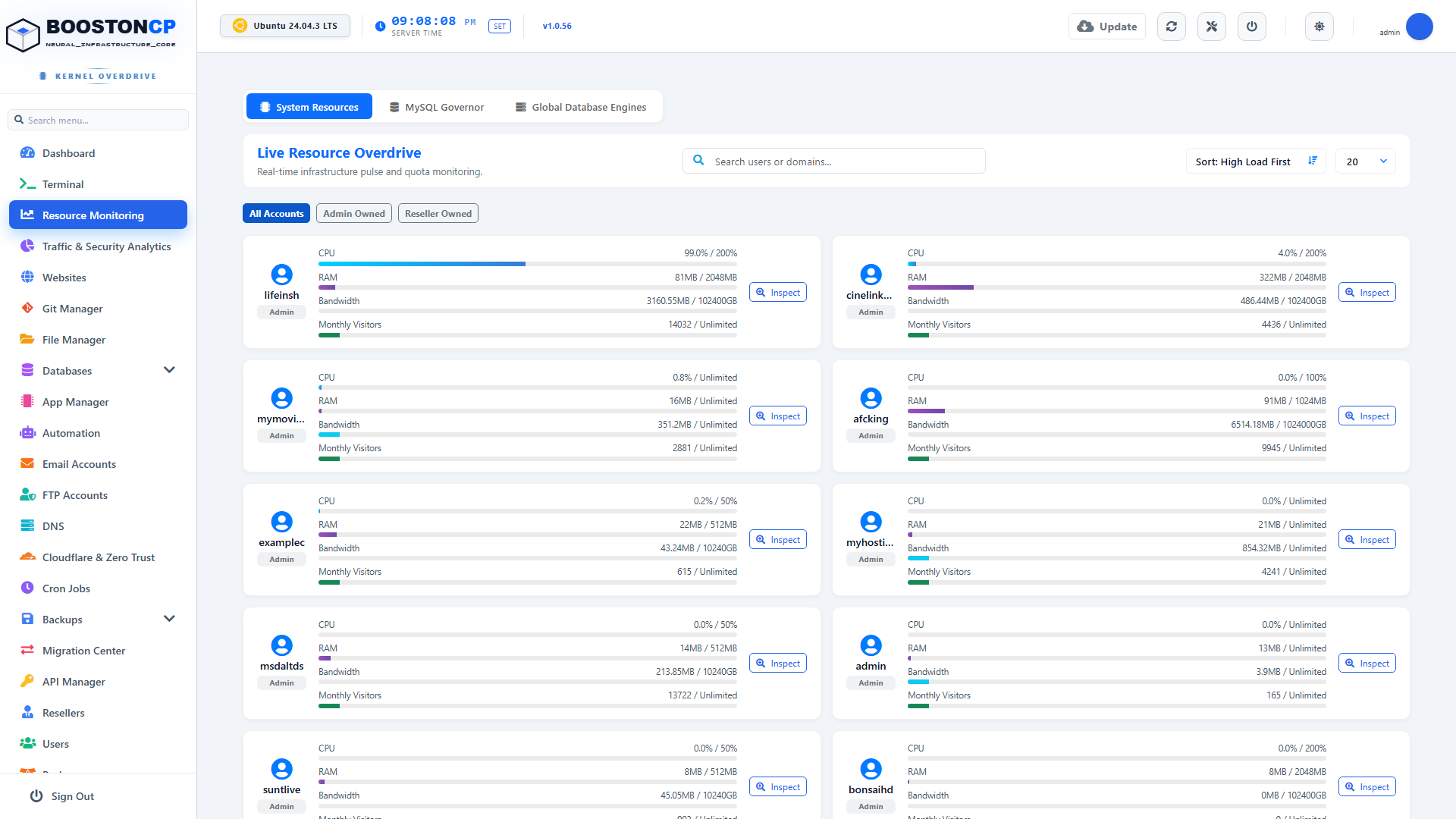
Hardware Resource Governance: Real-Time CPU, Memory & I/O Monitoring with Zero External Telemetry Tax
Chapter 7: The 5-Year Financial Audit — Vercel/AWS vs. BoostonCP VPS
Let us put emotional marketing aside and conduct a ruthless financial audit.
We will model a high-growth B2B SaaS startup or high-traffic web application scaling from 10,000 to 150,000 monthly active users (MAU), generating 15 Terabytes of monthly bandwidth, running automated background jobs, utilizing a PostgreSQL database, and maintaining three developer preview environments.
We will calculate the total operational expenditure across a 5-year lifecycle:
Scenario A: The Hyperscaler Serverless Stack (Vercel + AWS)
To run this workload comfortably without hitting rate limits in the serverless ecosystem:
- Vercel Pro Team Plan: 5 developer seats × \$20/seat = \$100/mo.
- Fast Data Transfer (Bandwidth Overage): 15 TB total – 1 TB included = 14 TB overage × \$150/TB = \$2,100/mo.
- Serverless Function Execution Overages: Heavy API routes and background webhooks = \$350/mo.
- Managed Serverless Database (Neon / Supabase Pro): Compute + storage + connection pooling = \$280/mo.
- AWS S3 Storage & Egress: User uploads and asset archiving = \$180/mo.
- Third-Party Edge Redis (Upstash): Dynamic caching and rate limiting = \$90/mo.
- Annual Compounding Price Adjustments: Conservative 8% annual infrastructure inflation.
Year-by-Year Cash Outflow (Hyperscaler Stack):
- Year 1: \$3,100.00 / month = \$37,200.00
- Year 2 (8% increase): \$3,348.00 / month = \$40,176.00
- Year 3 (8% increase): \$3,615.84 / month = \$43,390.08
- Year 4 (8% increase): \$3,905.10 / month = \$46,861.28
- Year 5 (8% increase): \$4,217.51 / month = \$50,610.19
- TOTAL 5-YEAR HYPERSCALER EXPENSE: \$218,237.55 USD
Scenario B: The Autonomous Self-Hosted Stack (BoostonCP on Cloud VPS)
Now, let us deploy the exact same architecture on high-performance, sovereign Cloud VPS infrastructure utilizing BoostonCP:
- Production VPS Node (e.g. Hetzner CCX33 or Vultr High Performance): 8 vCPUs, 32GB DDR5 RAM, 240GB NVMe, 20TB Free Bandwidth Included = \$48.00/mo.
- Staging & Backup VPS Node: 4 vCPUs, 8GB RAM, 160GB NVMe = \$16.00/mo.
- BoostonCP Autonomous Platform License: \$0.00 (Unlimited domains, unlimited apps, unlimited team seats forever).
- Resource Governance & Isolation: Native Linux kernel cgroups v2 resource allocation built into the OS = \$0.00.
- Database & Caching Layer: Native PostgreSQL 16 + Redis 7 running locally over zero-latency Unix sockets = \$0.00.
- Bandwidth Overage (15 TB used of 20 TB included): \$0.00.
- Cloudflare Free Tier (DNS, CDN, Edge Caching, and Tunnels): \$0.00.
Year-by-Year Cash Outflow (BoostonCP Stack):
- Year 1: \$64.00 / month = \$768.00
- Year 2: \$64.00 / month = \$768.00
- Year 3: \$64.00 / month = \$768.00
- Year 4: \$64.00 / month = \$768.00
- Year 5: \$64.00 / month = \$768.00
- TOTAL 5-YEAR AUTONOMOUS EXPENSE: \$3,840.00 USD
The Executive Financial Verdict
| Metric | Hyperscaler Serverless Stack (Vercel + AWS) | Autonomous BoostonCP Cloud VPS Stack | Net Business Advantage with BoostonCP |
|---|---|---|---|
| 5-Year Total Infrastructure Bill | \$218,237.55 | \$3,840.00 | +\$214,397.55 Retained Cash |
| Bandwidth Egress Tax | \$150.00 / TB | \$0.00 (20 TB Included Free) | 100% Egress Immunity |
| Cold Start Latency Penalty | 1,500ms – 3,500ms | 0ms (Always Hot in RAM) | Sub-10ms Dynamic Responses |
| Database Connection Failure Risk | High (Exhaustion during traffic spikes) | Zero (Persistent Connection Pools) | Rock-Solid Uptime |
| Per-Seat Developer Penalties | \$20 / developer / mo | \$0.00 (Unlimited Team Access) | Frictionless Team Scaling |
$$\text{Net 5-Year Capital Preserved} = \mathbf{\$214,397.55 \text{ USD}}$$
Think about what $214,000 in cold, hard cash means for an early-stage startup or growing digital business:
- It is the salary of two full-time senior software engineers.
- It is 18 months of extended runway during a harsh venture capital winter.
- It is the marketing budget to acquire your first 5,000 paying B2B customers.
- It is the difference between startup survival and catastrophic bankruptcy.
Handing over $200,000+ to cloud conglomerates for compute resources that can be rented for $64/month is not "modern engineering"—it is financial suicide.
Chapter 8: The Developer Workflow — From Git Push to Production in 10 Minutes
The final excuse developers cling to is the fear that moving away from Vercel will destroy their deployment velocity.
Let us walk through the exact deployment workflow on BoostonCP. It is as fast, elegant, and automated as any proprietary platform:
Step 1: Prepare Your Next.js Application
In your project repository, open next.config.js (or next.config.mjs) and enable standalone output mode:
/** @type {import('next').NextConfig} */
const nextConfig = {
  output: 'standalone', // Generates an ultra-lean self-contained production server
  poweredByHeader: false,
  compress: true,
};

module.exports = nextConfig;
Commit this change to your repository.
Step 2: Configure the App in BoostonCP App Engine
- Log into your secure BoostonCP dashboard. Unlike legacy control panels that suffer from insecure shared administration ports, BoostonCP enforces strict privilege separation.
- Navigate to App Engine $\longrightarrow$ Deploy New Application.
- Fill in the straightforward application parameters:
- Application Name:
saas-production - Domain Name:
app.yourdomain.com - Runtime Environment:
Node.js (LTS 20.x or 22.x) - Application Port:
3000(or any custom unassigned port) - Git Repository URL:
git@github.com:yourorg/saas-app.git - Deployment Branch:
main
- Application Name:
Step 3: Automated Zero-Downtime Deployment Script
Under the Build & Deploy Command section, define your standard build sequence:
# Automated deployment pipeline executed inside an isolated systemd slice
npm ci
npm run build
cp -r public .next/standalone/
cp -r .next/static .next/standalone/.next/

# Reload the PM2 cluster with zero dropped packets
pm2 reload saas-production || pm2 start .next/standalone/server.js --name "saas-production" -i max
Step 4: Webhook Automation (Push-to-Deploy)
Copy the generated Instant Webhook URL from the BoostonCP dashboard and paste it into your GitHub or GitLab repository settings under Webhooks (push event).
From this moment forward, every single time a developer pushes code to the main branch:
- GitHub fires a lightweight webhook payload to BoostonCP.
- BoostonCP pulls the latest differential git commit.
- The build executes inside an isolated Linux sandbox protected by native kernel resource boundaries.
- PM2 executes a graceful rolling restart across CPU workers.
- Host Nginx automatically maintains active client connections, swaps the upstream proxy in 0.001 seconds, and serves your new release with zero downtime.
If you need to test major database schema changes or experimental frontend designs before rolling them to production users, you can leverage BoostonCP's zero-risk WordPress and application staging engine to clone your entire production stack with a single click.
Chapter 9: Epilogue — Reclaiming Digital Sovereignty
The history of computing is a recurring cycle between centralization and decentralization.
In the 1970s, computing was centralized in giant corporate mainframes owned by IBM. In the 1980s and 1990s, the personal computer decentralized power, putting real computing into the hands of ordinary individuals.
In the 2010s, the cloud recentralized computing into three corporate empires—Amazon, Microsoft, and Google—convincing an entire generation of developers that they were incapable of running their own software without paying a permanent tax to Seattle and Mountain View.
The Cloud Exit is not merely a cost-cutting tactic. It is an intellectual and moral rebellion.
It is the decision that your business will not be held hostage by opaque billing algorithms. It is the decision that your software margins belong to you, your employees, and your investors—not to cloud executives buying superyachts with your egress fees.
The tools to run sovereign, high-density, ultra-fast infrastructure are here today. They are lighter, faster, more reliable, and completely free from per-account taxes.
The cloud was a detour. The server is back. It is time to come home.
Ready to Exit the Cloud and Cut Your Infrastructure Bill by 90%?
Stop letting serverless bill shocks dictate your startup's destiny. Experience the speed, power, and freedom of the modern autonomous cloud:
👉 Launch the Live Interactive BoostonCP Demo Environment (1-Click Instant Access)
Deploy full-stack Node.js, Next.js, and Python applications in seconds with zero open ports, native Linux cgroups v2 resource capping, and zero per-account fees forever.